What Is Striking Distance in SEO? A Practical Guide for Local Businesses
Striking distance in SEO means keywords ranking on positions 11-20. Learn how to find them, fix them, and turn page 2 rankings into page 1 traffic.
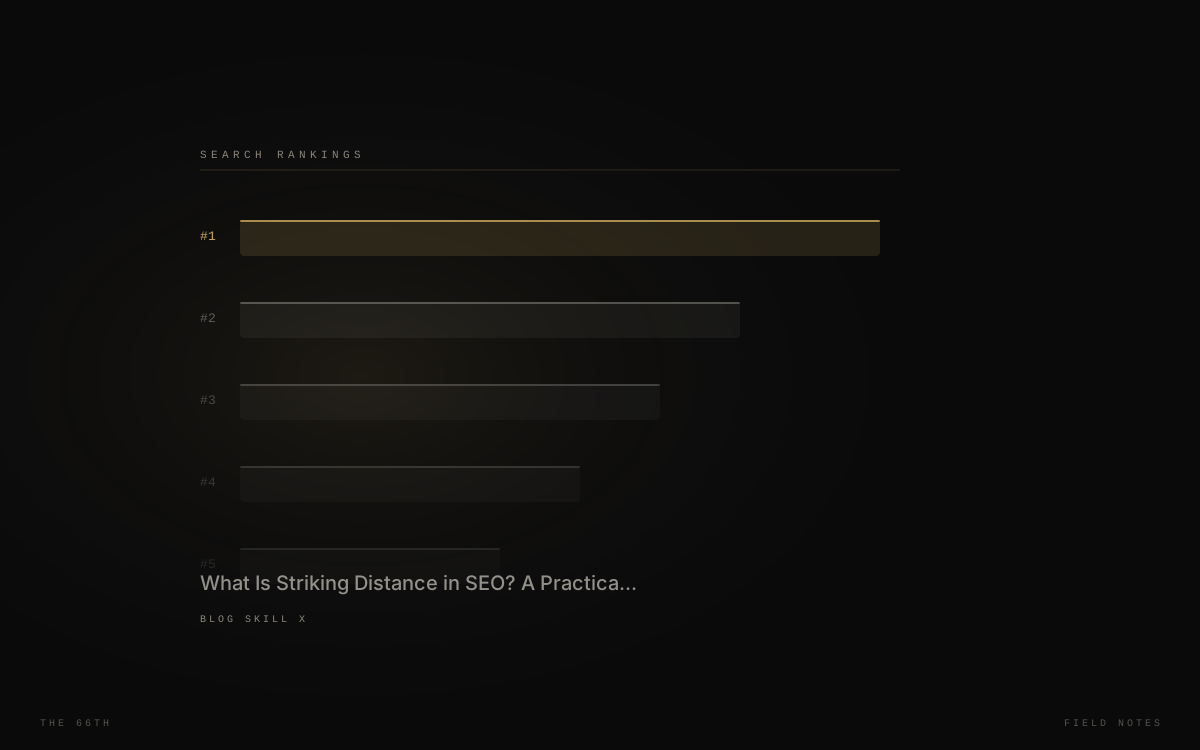
Striking distance in SEO is the gap between page 2 and page 1. These are the keywords your site already ranks for in positions 11 to 20, just outside the traffic zone. Most local businesses ignore them. That is a mistake.
Page 1 captures roughly 71% of all clicks, while page 2 captures less than 6% (Backlinko, 2023). Moving a keyword from position 13 to position 8 can multiply traffic by 10x or more. The work is smaller than chasing brand new rankings.
This guide explains what striking distance means, how to find your striking distance keywords, and the exact steps to push them onto page 1.
What Does Striking Distance Mean in SEO?
Striking distance refers to keywords where your page ranks in positions 11 to 20 on Google, meaning the top of page 2 or the bottom of page 1 in some configurations. The term comes from the idea that these rankings are close enough to page 1 that focused effort can push them over the line.
The concept was popularised by Aleyda Solis and other technical SEOs as a way to prioritise quick wins over long-shot rankings. Position 11 is 1 spot away from position 10. Position 50 is 40 spots away. The math favours the closer fight.
Why Positions 11 to 20 Matter
The first organic result on Google captures around 27.6% of clicks (Backlinko, 2023). Position 10 gets about 2.4%. Position 11, on page 2, drops below 1%. The cliff between page 1 and page 2 is steep, which is exactly why moving a few spots up creates outsized traffic gains.
How Striking Distance Differs from Other Keyword Buckets
SEO teams usually sort keywords into 3 groups: ranking already (1-10), striking distance (11-20), and long tail or aspirational (21+). Each bucket needs different work. Striking distance keywords need refinement. Long tail keywords need new content or stronger backlinks.
How Do You Find Your Striking Distance Keywords?
You need real ranking data to find striking distance keywords. Guessing does not work. The 2 best free sources are Google Search Console and any rank tracking tool you already use.
Using Google Search Console
Open Search Console, go to Performance, and set the date range to the last 28 days. Add a filter for average position greater than 10 and less than 21. Sort by impressions descending. The top results are your highest-leverage striking distance keywords. They get seen often but rarely clicked.
Export the list. Filter out branded queries (your business name) since those will rank regardless. What remains is your priority list.
Cross-Checking with a Rank Tracker
Search Console averages position over time, which can hide volatility. A keyword that bounces between position 8 and position 18 will average to 13. Cross-check with a tool that shows daily rankings to find keywords that are stable in striking distance versus those still moving.
Filtering for Commercial Value
Not every striking distance keyword is worth fixing. Filter by intent. A keyword like "plumber near me" matters for a plumbing business. A keyword like "history of plumbing" probably does not. Match each keyword to a stage in your buyer journey before you commit time to it.
Which Striking Distance Keywords Should You Prioritise First?
You cannot fix every keyword at once. Prioritisation comes down to 3 factors: search volume, current position, and business relevance. Score each keyword against all 3.
| Priority Level | Position Range | Monthly Searches | Effort Required | Expected Lift |
|---|---|---|---|---|
| Tier 1 (do first) | 11-13 | 200+ | Low | 5-10x traffic |
| Tier 2 (do next) | 14-17 | 100-200 | Medium | 3-5x traffic |
| Tier 3 (longer term) | 18-20 | 50-100 | Higher | 2-3x traffic |
| Skip | Any | Under 50 | Any | Minimal |
Why Position 11 Beats Position 19
A keyword at position 11 needs 1 small push to enter page 1. A keyword at position 19 needs to leapfrog 9 competitors. Same effort, different payoff. Always start at the top of the striking distance band and work down.
Why Search Volume Alone Misleads
A high-volume keyword in striking distance can still be a poor target if the search intent does not match what your page offers. Check the current page 1 results. If they are all guides and yours is a product page, ranking will not happen until you change the format.
What Specific Changes Move a Keyword from Page 2 to Page 1?
Most striking distance fixes fall into 5 buckets: title tag optimisation, content depth, internal linking, search intent alignment, and freshness. Run through them in order.
Optimise the Title Tag and H1
The fastest fix is making sure the keyword appears in the title tag and H1, ideally near the start. If your page ranks at position 13 for "vancouver bike repair" but your title is "Our Services", that is the first thing to change. A clear, keyword-led title can move rankings within a week of recrawl.
Add Content Depth and Cover Subtopics
Compare your page to the top 3 ranking pages. What subtopics do they cover that you skip? Add those sections. Google rewards pages that fully answer the query, not pages that mention the keyword once. This is also where a strong topical authority approach pays off.
Strengthen Internal Links to the Page
Find 3 to 5 high-traffic pages on your site and add a link to your striking distance page using the target keyword as anchor text. Internal links pass authority and tell Google which pages you consider important. This single tactic can move rankings 2 to 5 spots within a crawl cycle.
Match Search Intent
If page 1 is dominated by listicles and your page is a single product, you have a format mismatch. Rewrite to match the dominant intent. Sometimes this means converting a sales page into a guide that links to the sales page.
Refresh and Republish
Update statistics, add a current year, refresh examples, and update the publish date. Pages that look current rank better than pages that look abandoned. Google has stated freshness is a ranking factor for many query types (Google Search Central, 2024).
How Long Does It Take to See Results?
Striking distance optimisations show results faster than new content. Most pages re-rank within 2 to 8 weeks of changes, depending on crawl frequency and competition.
What to Expect in the First Month
After making changes, watch Search Console daily. You should see impressions and average position shift within 2 weeks. If nothing moves after 30 days, the changes were not strong enough. Go deeper on content or links.
When Results Stall
Sometimes a page improves to position 11 then stops. This usually means you have hit a backlink ceiling. The page has the content quality to rank top 10 but lacks the authority signals. At that point, building 1 or 2 quality backlinks often breaks the plateau. For local businesses, local citations and review signals can also help.
How Does Striking Distance Apply to Local SEO?
Local SEO has its own version of striking distance. Instead of organic ranking positions, you watch the local pack and Google Business Profile rankings across geographic grids.
Striking Distance in the Local Pack
The local pack only shows 3 results. Striking distance for local pack means ranking 4 to 10 on the local finder. Push from 4 to 3 and you enter the pack, capturing massively more clicks and calls. The fix usually involves Google Business Profile optimisation, review velocity, and on-page location signals.
Grid Rank Tracking
Tools that show your ranking across a geographic grid reveal striking distance opportunities by neighbourhood. You might rank top 3 downtown but position 8 in a suburb 5 km away. Local landing pages and citations targeting that suburb can close the gap.
Striking Distance in AI Search
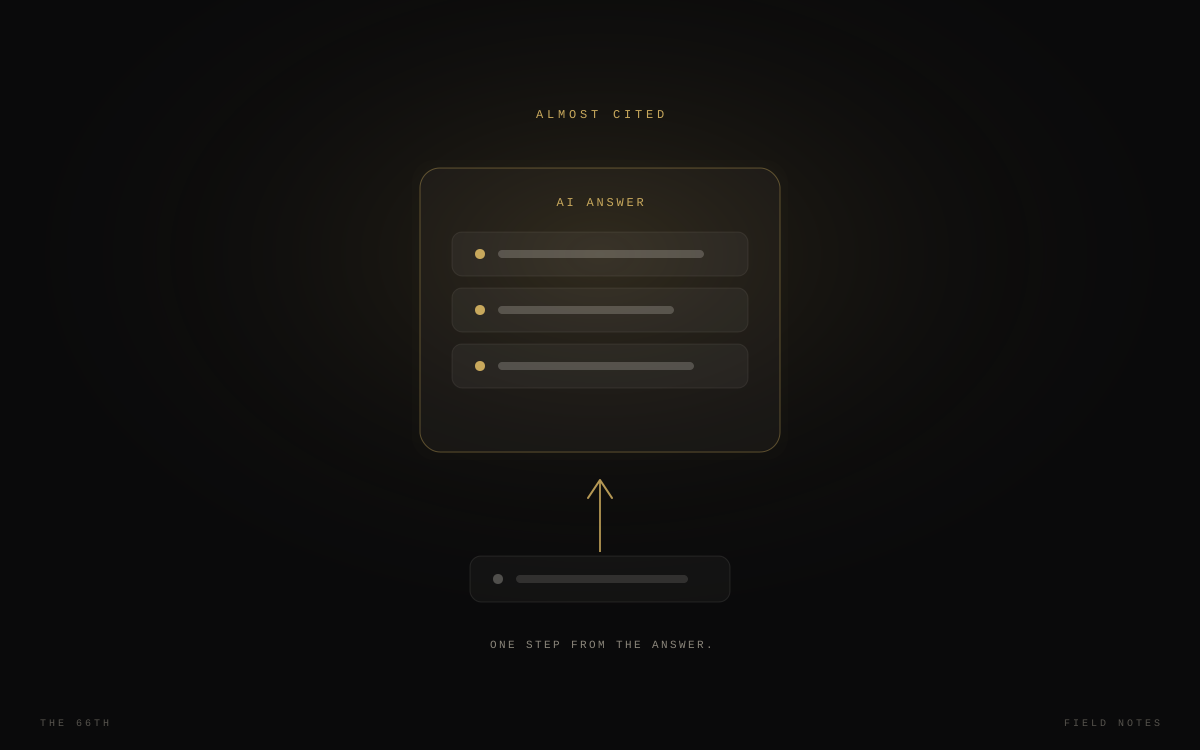
Striking distance now has an AI version. ChatGPT, Perplexity, and Google AI Overviews pull from a small set of sources when they answer a question, and your page can be one they almost use: relevant enough to be in the running, but not yet the cleanest or most trusted answer on the topic. The fix mirrors the page-two playbook. Tighten the passage that answers the exact question, make the key claim easy to quote in a sentence or two, and earn a few more links or citations so the model trusts the page enough to name it. The brands that win these almost-cited queries are usually the ones already ranking on page one for the same term, which is why the organic work and the AI work move together.
FAQ
What is striking distance in SEO?
Striking distance in SEO means keywords where your website ranks in positions 11 to 20 on Google. These are page 2 rankings that are close enough to page 1 that focused optimisation can push them into the top 10, where most clicks happen.
Why are striking distance keywords valuable?
Striking distance keywords are valuable because page 1 captures around 71% of all organic clicks while page 2 captures under 6%. Moving a keyword from position 13 to position 8 can multiply traffic 10x or more, and the work is smaller than ranking a brand new keyword.
How do I find striking distance keywords?
Open Google Search Console, go to Performance, and filter for queries with average position between 10 and 21. Sort by impressions to find keywords that get seen often but rarely clicked. Remove branded queries to get your priority list.
How long does it take to move a keyword from page 2 to page 1?
Most striking distance keywords improve within 2 to 8 weeks of optimisation, depending on Google's crawl frequency and competition level. Title tag changes often show fastest, while content and link changes take longer to take effect.
What is the fastest way to push a striking distance keyword onto page 1?
The fastest fix is optimising the title tag and H1 to include the target keyword near the start, then adding 3 to 5 internal links from high-traffic pages using the keyword as anchor text. These 2 changes together can move rankings within a single crawl cycle.
Should I focus on striking distance keywords or new content?
Focus on striking distance keywords first because the effort to reward ratio is much better. New content takes 6 to 12 months to rank, while striking distance fixes can show traffic gains in weeks. Build a habit of monthly striking distance audits before investing in new content.
Does striking distance apply to local SEO?
Yes. In local SEO, striking distance means ranking positions 4 to 10 in the local finder, just outside the 3-pack. Pushing into the pack requires Google Business Profile optimisation, consistent reviews, and strong location signals on your website.
Key Takeaways
- Striking distance in SEO refers to keywords ranking in positions 11 to 20, the page 2 zone closest to page 1.
- Page 1 captures around 71% of clicks while page 2 captures under 6%, making small ranking gains hugely valuable.
- Find striking distance keywords in Google Search Console by filtering for average position between 10 and 21.
- Prioritise keywords at positions 11 to 13 with strong commercial intent and at least 200 monthly searches.
- The 5 highest-impact fixes are title tag optimisation, content depth, internal linking, intent matching, and content refreshing.
- Most striking distance keywords move within 2 to 8 weeks of optimisation.
- For local businesses, striking distance also applies to local pack rankings at positions 4 to 10.