AI Citations Are the New Word of Mouth
AI citations are the short list AI tools hand a buyer who asks for options. Here is how they work, why they convert like a referral, and how to earn them.
When someone in your market asks ChatGPT or Google who to hire, your business earns an AI citation or it does not. The answer names a few companies. Yours is on the list or it is invisible.
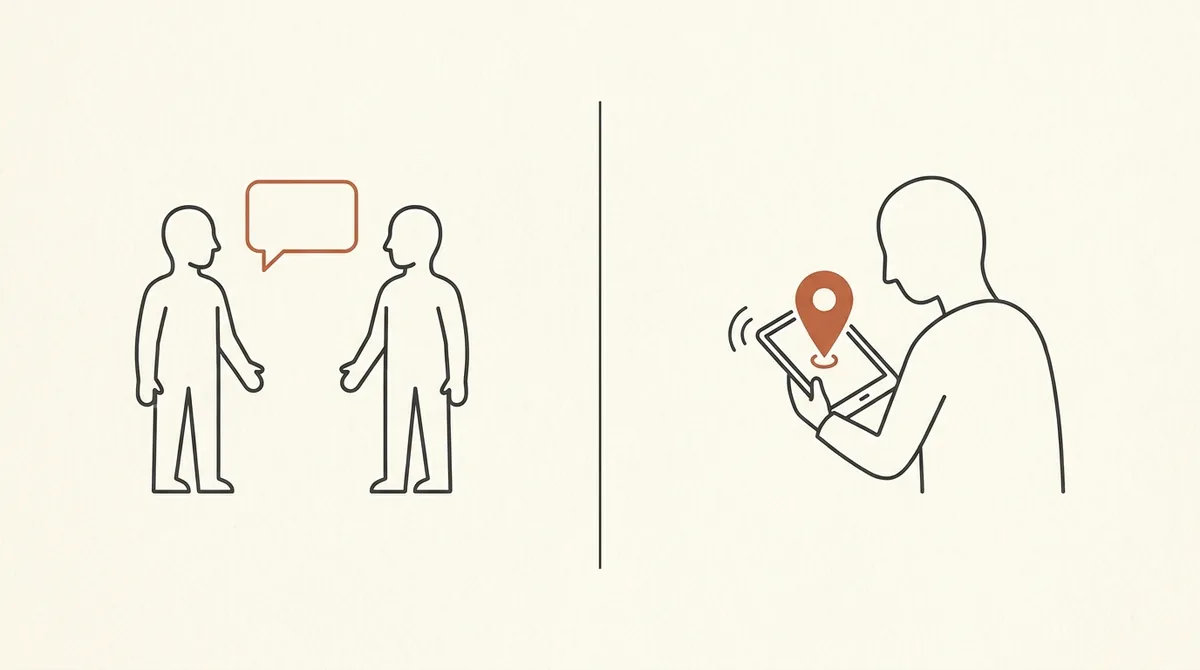
That moment is the new version of a friend leaning over and saying, "call these people, they are good." For years that recommendation traveled by word of mouth. Now it travels through AI search too. When a buyer asks ChatGPT, Perplexity, Google, or Claude for options, the tool reads the open web and hands back a short list. Earning a spot on that list is an AI citation.
Here is what an AI citation is, why it works like word of mouth, how AI engines decide who to name, and what you can do this quarter to get recommended.
What an AI citation actually is
An AI citation is a mention or link an AI tool gives your business when it answers a buyer's question. Someone asks for the best option in your category. The tool names a handful of companies. Each name it surfaces is a citation.
You do not buy these. You earn them. They sit closer to a recommendation than an ad, which is exactly why buyers trust them.
The plumbing matters less than the result. Google, ChatGPT, and the rest read public pages, reviews, videos, and forum threads, then summarize what they find. Your job is to be the business those sources keep pointing to.
Why a recommendation from AI feels like word of mouth
A referral works because someone you trust did the vetting for you. You skip the research and act on their word. An AI recommendation lands the same way. The buyer asked a neutral tool, the tool named you, and that carries the weight of a third party saying you are worth a look.
The numbers show how ready these buyers are. Across 94 online stores in 2025, shoppers arriving from ChatGPT bought at 1.81 percent versus 1.39 percent for general search, about 31 percent higher (Search Engine Land, 2026). Those same ChatGPT visits grew 1,079 percent over the year (Search Engine Land, 2026).
Read that the way a buyer behaves. Someone who asks an AI for a recommendation and then clicks through has already narrowed the field. They are not browsing. They are close to deciding.
This does not replace anything you already do. Search, referrals, and paid ads all still work. AI search is one more place where the businesses that built a real presence get named, and it compounds with the rest.
Here is how the three ways a buyer hears about you line up side by side.
| How a buyer hears about you | Who did the vetting | What it costs to keep | How the buyer reads it |
|---|---|---|---|
| A referral | Someone they already trust | Nothing you can control | A personal recommendation |
| A paid ad | No one, you bought the spot | Payment for every click | A promotion |
| An AI citation | A neutral tool that read the open web | The content and reviews behind it | A recommendation |
How AI engines decide who to recommend
AI tools do not invent recommendations. They repeat what the open web already says about you. So the question gets simple. When an engine reads your market, does your business look like an obvious answer?
A few signals do most of the work:
- Clear pages that answer real buyer questions. AI models pull from content that states things plainly. Write the page that answers what your customer is asking, in their words. We break down the how in optimizing content for AI search.
- Proof that you are real and active. Reviews on the platforms your buyers check, a steady presence, and third-party mentions all tell an engine you are a safe pick.
- Content for every stage of the decision. Buyers rarely start ready to hire. They start curious, move to comparing options, then choose. Show up across all three and the engine sees you the whole way down.
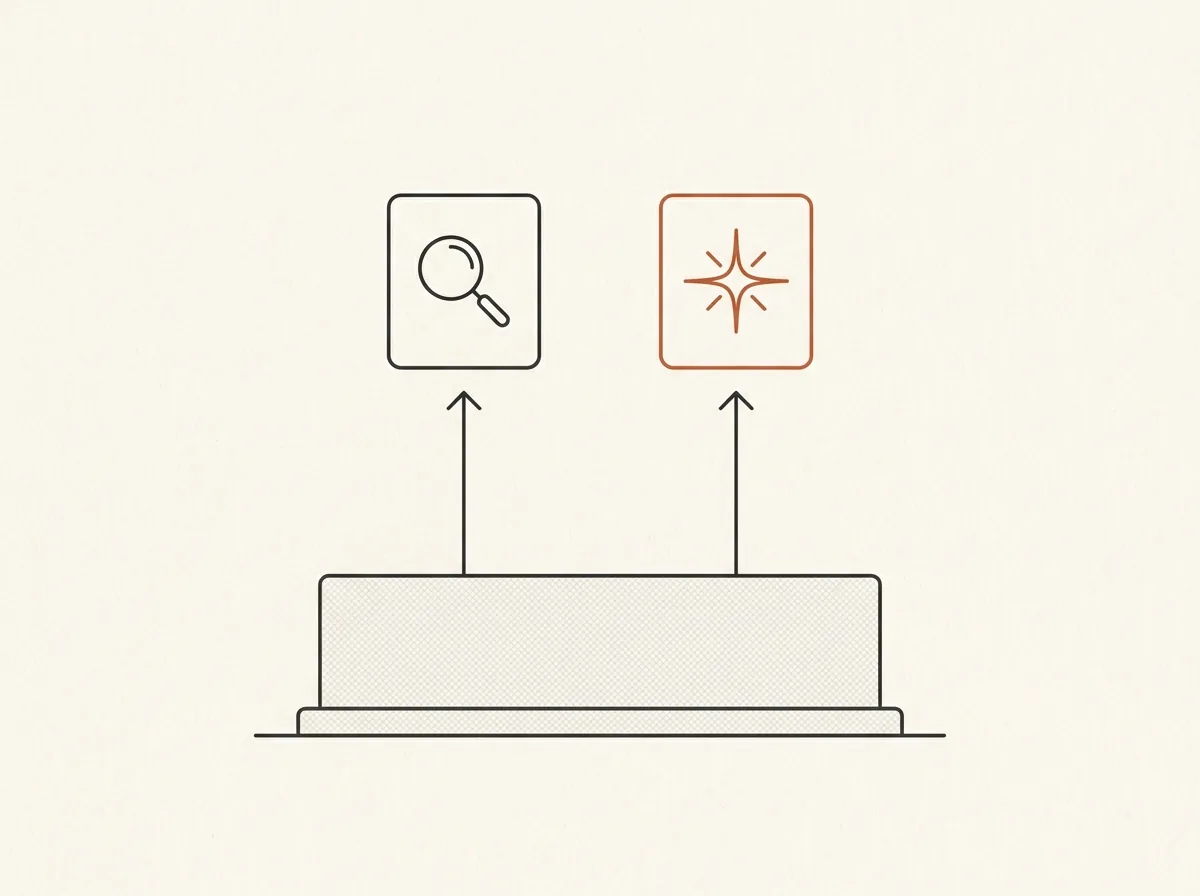
None of this is a trick. The same foundation that earns Google rankings earns AI citations. At The 66th, we build that asset once and both engines start pointing to you. In our work rebuilding the content for an AI video company, we watched its sales from ChatGPT and Gemini climb on the back of the same pages that were already ranking on Google.
What you can do this quarter
You do not need to overhaul everything. Start where buyers are already deciding.
- Answer the comparison question. Write the honest "best [your category]" and "[option] vs [option]" pages your buyers read before they choose. AI search leans heavily on this kind of content.
- Fix the pages that almost rank. You likely have pages sitting just off the first page. You move faster improving those than writing new ones.
- Build review velocity. Ask every happy customer, on the platforms your buyers actually read. Steady reviews feed both trust and AI answers.
- Put your expertise on video. AI tools pull heavily from video when they recommend. A few clear, useful videos go a long way.
- Track who is naming you. Ask the big AI tools your buyers' questions once a month, the way we do when we find your AI search queries. Watch whether your name shows up, and where it does not.
Done together, these compound. Each ranked page, each review, each video adds to the total, and the total is what an engine reads when it decides who to name.
If you want help building that foundation, our team does this for a living.
Key takeaways
- An AI citation is the short-list mention an AI tool gives your business when a buyer asks for options. You earn it, you do not buy it.
- Buyers trust it because a neutral tool did the vetting, the same reason a referral converts.
- Shoppers from ChatGPT converted about 31 percent higher than general search across 94 stores in 2025 (Search Engine Land, 2026).
- AI engines repeat what the open web says about you. Clear pages, real reviews, and video make you the obvious answer.
- The foundation that earns Google rankings earns AI citations. Build it once, get found in both.
FAQ
What is an AI citation? An AI citation is when a tool like ChatGPT, Perplexity, or Google names or links your business while answering a buyer's question. It works like a recommendation, because the buyer asked a neutral source and your name came back.
Do I need a separate service to get recommended by AI? No. Good search work earns AI citations on its own. When your pages answer real questions and your reviews and presence say you are legitimate, AI tools start naming you. The same foundation does both jobs, which is why we bundle it into the way we get a business recommended by AI.
How is getting cited by AI different from running ads? You pay for an ad and it stops the moment you stop paying. An AI citation is earned, so it keeps working as long as your content and reputation hold. Buyers also read a citation as a recommendation, not a promotion. Both have their place, and many businesses run them together.
Which businesses can get recommended by AI search? Any business people actively search for. If buyers ask for options in your category, an AI tool is already answering them. The work is making sure your name is in that answer.
How do I know if AI tools recommend me? Ask them. Once a month, type your buyers' real questions into the major AI tools and see whether your business appears. Note where you show up, and where your category gets named without you.
Will AI search replace Google for my customers? Not for most businesses, and you do not have to choose. People still search the way they always have, and now some of them also ask AI tools. The businesses that built their search foundation well tend to show up in both.
When you are ready to see whether AI tools are naming your business, we are here.